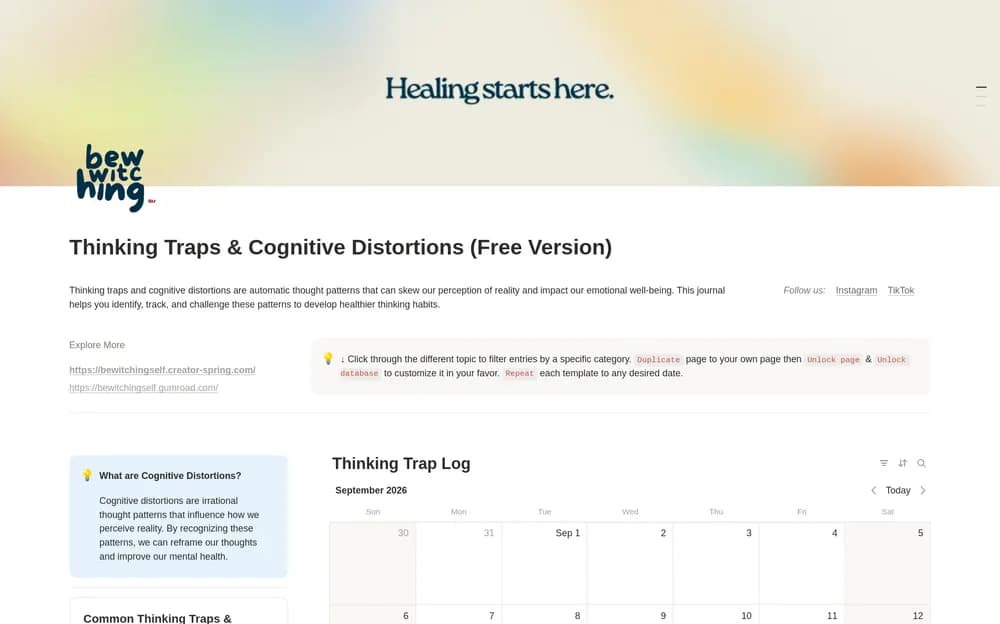
About Thinking Traps and Cognitive Distortions Tracker
Learn ten common thinking traps and work through upsetting thoughts in Notion with a guided six-step journal, calendar view, and weekly reflection.
What’s included
- Explanations of ten cognitive distortions such as catastrophizing and mind reading
- Guided thought journal from situation to alternative thought
- Emotion and intensity recording
- Calendar view of entries
- Weekly reflection within entries
How to use it in practice
Read through the ten thinking traps first so the names are familiar. When a thought feels intense during the week, open a new entry and work through the six steps, including the evidence for and against it. Keep each entry to about five minutes, then use the weekly reflection to look for recurring triggers or traps.
Set it up in your workspace
- Open the original Notion Marketplace listing and add the template to your chosen workspace while signed in. Keep its example records until you understand how the pages connect.
- Read through the ten thinking traps first so the names are familiar.
- Try one complete example before adding a large backlog. Check that its views and any calculations show what you expect, then replace the sample content with your own.
Who it suits and what to consider
People who want a structured, private way to question negative thoughts as they happen. It is a self-reflection journal, not a replacement for therapy or professional mental health support. Patterns only appear if you write entries regularly.