 Free
FreeAgency Risk & Documentation Tracker
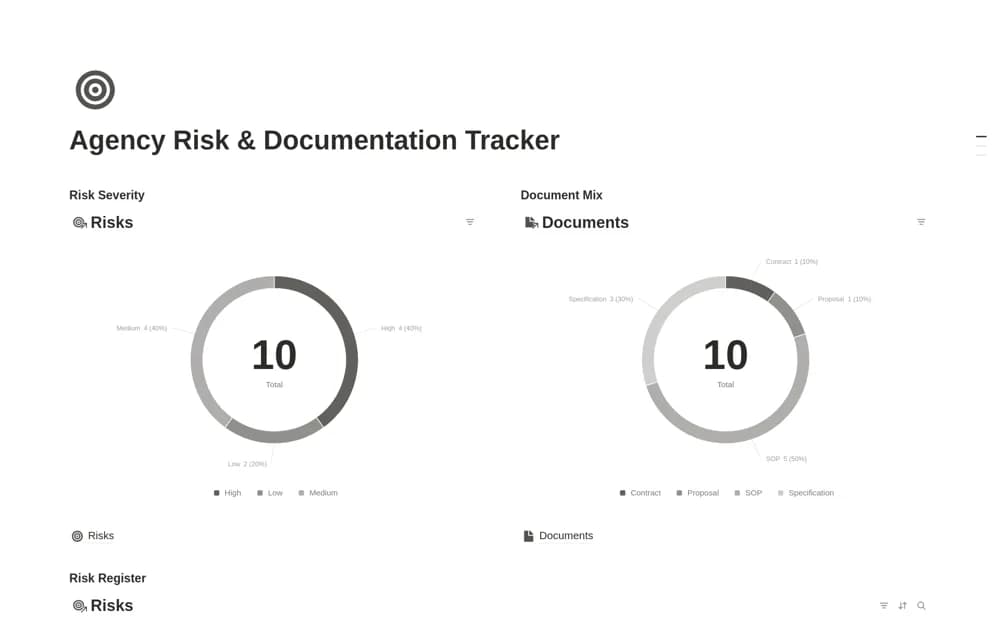
An agency review workspace with separate risk and document libraries, connecting severity, likelihood, impact, ownership, mitigation, document versions, and review dates.
Keep project and operational risks visible before they become urgent. Compare Notion risk registers for recording causes, potential effects, mitigation work, owners, and review dates.
Showing 1–3 of 3 templates
A little structure goes a long way.FreeAn agency review workspace with separate risk and document libraries, connecting severity, likelihood, impact, ownership, mitigation, document versions, and review dates.
 Free
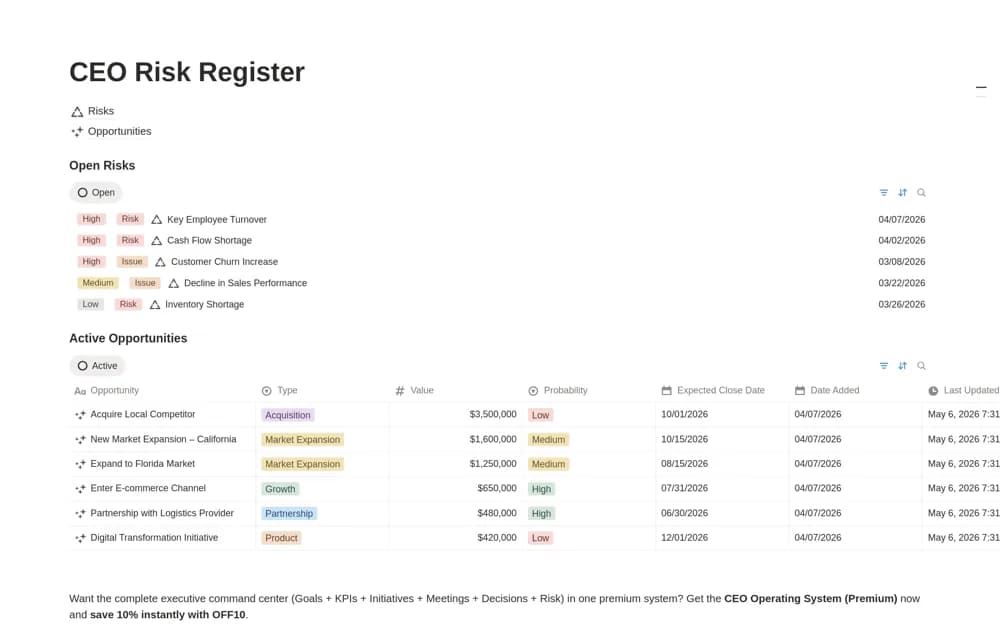
FreeAn executive risk workspace with separate risks and opportunities, open-risk views, and fields for impact, likelihood, ownership, mitigation, and next actions.
 Free
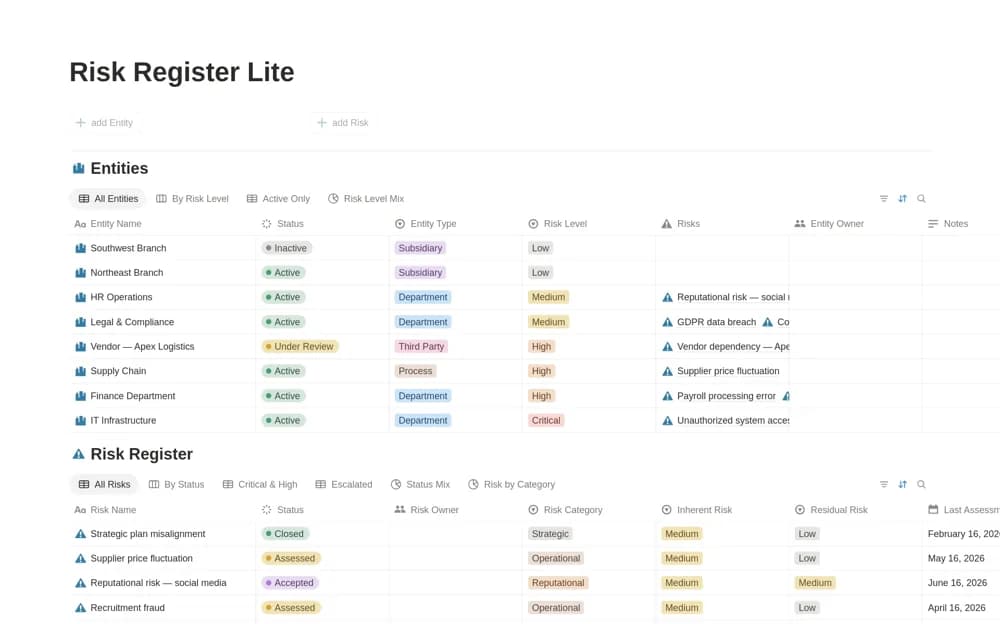
FreeAn audit-oriented risk register linking risks to entities, with inherent and residual ratings, assessment dates, ownership context, status views, and a category chart.
Compare the purpose and included features before choosing a workspace.
Agency owners and delivery leads reviewing operational exposure alongside the documentation needed to manage it.
Founders and operations leaders who want a focused review of uncertainty and potential upside.
Internal audit, risk, and finance teams that need to review exposure by business unit or third party.
Describe a risk as something that could happen, then explain its likely effect. Distinguish it from an issue that has already occurred. Choose rating definitions the team understands and assign a person to each response. Review risks after meaningful changes rather than only at kickoff. A useful register shows what changed, what action is underway, and whether the remaining exposure is acceptable to the person responsible for the decision.
Risk owners and review dates
Likelihood and impact definitions
Mitigation actions and status
About the directoryWrite what could happen and explain its effect on the work. Keep existing issues distinct from future risks. Use agreed likelihood and impact definitions, then record the response and the person responsible. Revisit the rating after a change or mitigation action instead of leaving the initial score unchanged throughout a project.
In this context, inherent risk describes exposure before considering the controls being assessed, while residual risk describes what remains after them. Use your organization’s definitions consistently and keep the evidence for control effectiveness visible.
Yes. This collection currently includes 3 listings with a confirmed free creator offer. Use the Free filter to compare them. A free version can have different features from a creator’s paid upgrade, so check the original listing and current access terms before adding it to your workspace.