 Free
Incident Post-mortem Template
Write a structured incident review in Notion using incident.io’s editable post-mortem document, with a focus on recording lessons clearly.
Preserve the lessons from an incident or difficult delivery. Explore Notion post-mortem templates for impact, contributing factors, evidence, and changes the team can verify.
Showing 1–3 of 3 templates
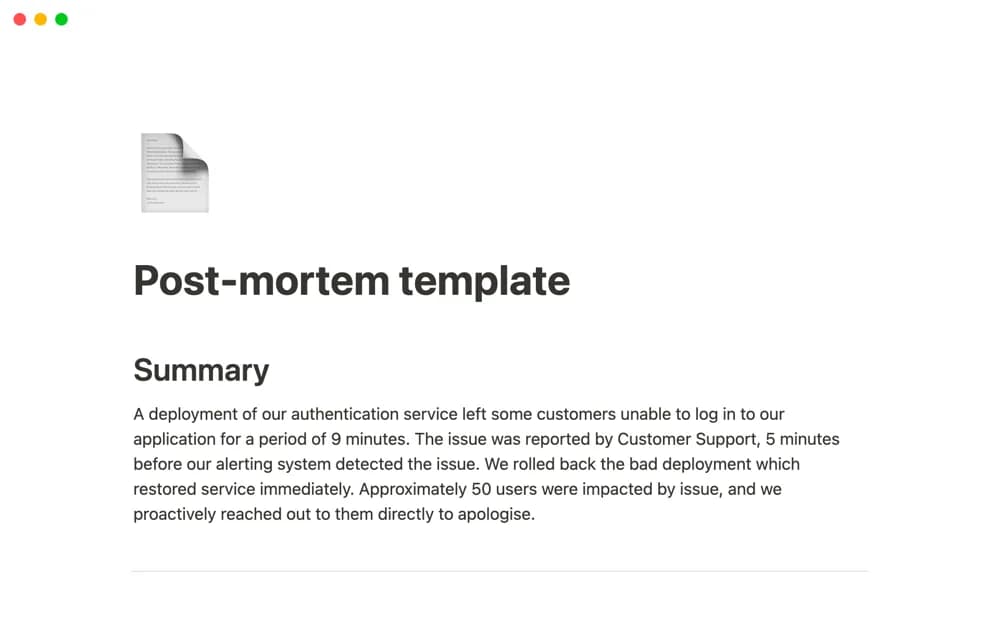
FreeWrite a structured incident review in Notion using incident.io’s editable post-mortem document, with a focus on recording lessons clearly.
 Free
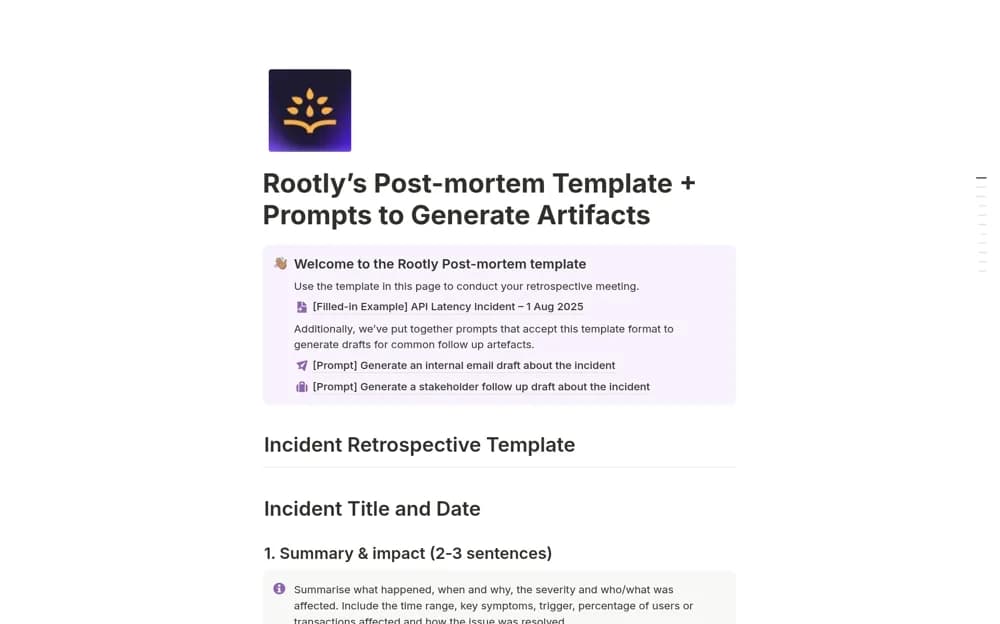
An incident-review page with a filled latency example and optional prompts for drafting stakeholder follow-ups.
 Free
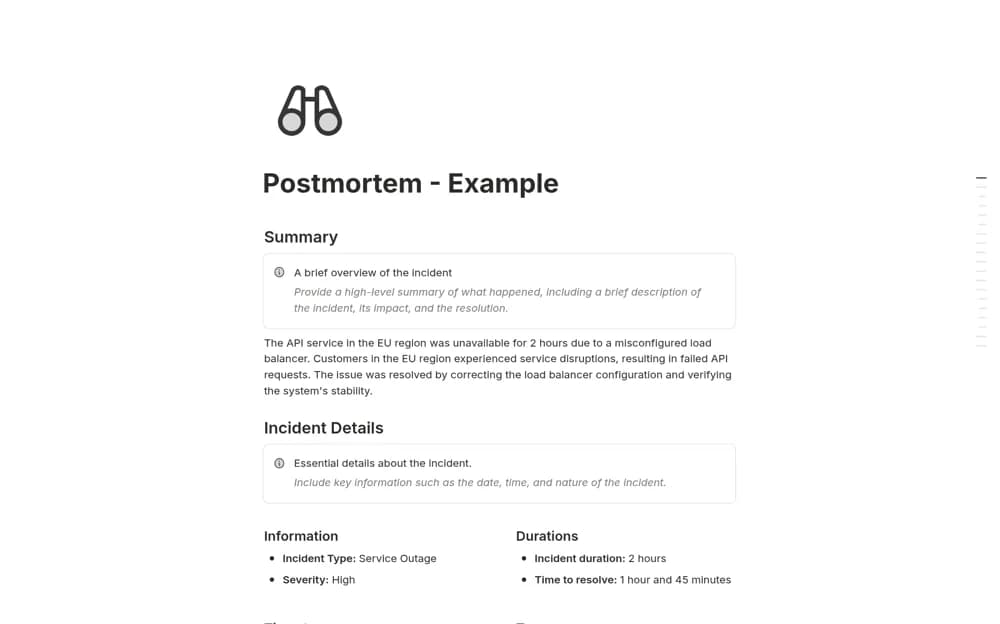
An incident review framework for timelines, impact, contributing factors, resolution, and owned prevention work.
Compare the purpose and included features before choosing a workspace.
Teams writing a readable review after an incident has been stabilized.
Engineering and incident teams documenting an outage and its lessons.
Teams documenting what happened after a service incident or failure.
3 working templates from 3 creators: 3 free. Links last checked October 12, 2026.
| Template | Best for | Price | Creator |
|---|---|---|---|
| Incident Post-mortem Template | Teams writing a readable review after an incident has been stabilized. | Free | incident.io |
| Post-mortem + example and prompts | Engineering and incident teams documenting an outage and its lessons. | Free | Rootly |
| Postmortem Starter | Teams documenting what happened after a service incident or failure. | Free | Marco Elizalde |
Reconstruct the sequence from records and distinguish contributing conditions from assumptions. Explain what made detection or recovery difficult without reducing the review to individual blame. Choose follow-up actions with an owner and an observable completion condition. Keep the report accessible to the people who need its lessons, while restricting sensitive operational or customer information.
Evidence-based chronology
Contributing conditions
Verifiable follow-up work
About the directoryBegin with the event timeline and confirmed observations. Examine contributing conditions and what helped or hindered the response, separating analysis from hindsight assumptions. Assign concrete improvements with owners and review dates. Keep the discussion focused on learning from the system and circumstances, then check whether the agreed changes were actually completed and useful.
Jump straight to any listing in the collection.
The report records the event and response. The post-mortem analyzes contributing factors and improvements afterward. Keeping them connected preserves the original evidence while making it clear which conclusions were reached later.
It depends on the job you need it to do. Good starting points in this collection include Incident Post-mortem Template (teams writing a readable review after an incident has been stabilized), Post-mortem + example and prompts (engineering and incident teams documenting an outage and its lessons) and Postmortem Starter (teams documenting what happened after a service incident or failure). Compare the included features below, then try your first choice with a week of real information before moving everything across.
Yes. This collection currently includes 3 listings with a confirmed free creator offer. Use the Free filter to compare them. A free version can have different features from a creator’s paid upgrade, so check the original listing and current access terms before adding it to your workspace.